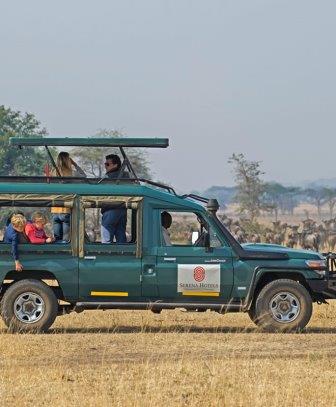
The smell of petrichor on red-oat grass. The sub-sonic rumble of ten thousand hooves. A leopard's amber
gaze at six feet. Private conservancy access means you experience this — alone.
Every package is hand-crafted by our expert team — no cookie-cutter itineraries, no hidden costs.
🔥 Most Booked⚡ 3 spots left
14 nights · Kenya & Tanzania · Fly-in
14-Night Great Migration Circuit
Full BoardAll FlightsPark FeesExpert Guide
🦍 Permit Included
8 nights · Uganda & Rwanda · Road & Air
8-Night Gorilla & Wildlife Trek
Full BoardGorilla PermitTransfers
Luxury⚡ Only 2 spots
10 nights · Tanzania · Fly-in · Luxury
10-Night Tanzania Big Five Circuit
Full BoardFly-inNgorongoro Fee
Short Break
5 nights · Kenya · Fly-in
5-Night Masai Mara Fly-in Escape
Full BoardFly-inGame Drives
Multi-Country
12 nights · Kenya · Tanzania · Uganda
Classic East Africa Loop
Full BoardAll FlightsPark Fees
Honeymoon⚡ 3 dates remain
7 nights · Kenya · Zanzibar
Honeymoon Safari & Beach
Full BoardPrivate GuideBeach Stay
Kenya — The Pride of Africa
Where Safari
Was Invented.
The word itself —
safari
— is Swahili for journey, and at 5:45am in the Masai Mara when the engine clicks off and your guide
whispers
"don't move"
, you understand exactly what it means. The smell reaches you before the sound: warm grass, crushed
acacia thorn, something electric in the cold pre-dawn air. Then the low rumble — not thunder, not engine
— a lion calling from 400 metres away in the dark. Your chest vibrates with it. Kenya does this before
breakfast. Fourteen million wildebeest follow ancient rain-scent corridors across 40,000 km² of open
savannah. Amboseli elephants, their tusks dusty-orange from the volcanic soil, materialise out of
morning mist beneath a Kilimanjaro that fills your entire field of vision at 6am. At Loisaba the star
beds roll out at dusk — handcrafted four-poster platforms perched above a waterhole — and the Milky Way
arrives so dense and close it feels structural, as if you could lean against it. Baraka the blind black
rhino at Ol Pejeta, deaf to your heartbeat, takes melon from your palm with a gentleness that rewires
everything you thought you knew about wilderness. This is Kenya: not a destination but a recalibration.
Jul–Oct:
Migration river crossings · Big cats at peak
Jan–Mar:
Dry, clear skies · Excellent year-round
🦁 Masai Mara🐘 Amboseli🐆 Samburu🦏 Laikipia🦒 Nairobi🦩 Lake Nakuru🌊 Diani Beach🏔 Tsavo🌿 Meru⛵ Lamu Island
60+
Game Reserves & Parks
1.5M
Wildebeest Migration Annual
1,100+
Bird Species Recorded
#2
Highest Peak in Africa (Mt Kenya)
580
km
Indian Ocean Coastline
Year-round
Prime Wildlife Season
🔥 #1 Most Booked⚡ Jul–Oct only
Limited 2026 dates
1.5M
wildebeest cross annually
6 nights · Mara Private Conservancy · Fly-in
The Migration — Private Conservancy, Front Row
Most people see the crossing from the road. You see it from your tent. Your private conservancy shares
a border with the Mara National Reserve but issues a fraction of the vehicle licences — so when the
wildebeest mass at the riverbank and the crocodiles wait, you'll have the bank mostly to yourself.
Night drives included. Walking safaris included. Six nights of the best predator-to-plains ratio on
the continent.
Charter FlightsPrivate ConcessionNight DrivesFull Board
🐘 Africa's Postcard
5 nights · Amboseli National Park · Kenya
Amboseli — Elephants Against Kilimanjaro at Dawn
At 6am on the Amboseli plains, the light turns gold, the mist lifts from Kilimanjaro, and a hundred
elephants walk towards the swamp in a column so long you lose count. Africa's most photographed image,
delivered in real life, before breakfast. Amboseli hosts the largest free-roaming elephant herds in
East Africa — and the families here have been studied so long, researchers know them by name. Five
days that will permanently change what you think an elephant is.
Full BoardBig FiveKilimanjaro ViewsPrivate Camp
🧭 Northern Kenya
Samburu Special 5
7 nights · Samburu · Mara North · Fly-in
Samburu Special Five — Where Evolution Went Its Own Way
Five species found nowhere else in East Africa: the reticulated giraffe with its mosaic-tile coat.
Grevy's zebra — bigger, slower, more solitary than its southern cousin. The gerenuk, standing on hind
legs to browse acacia leaves six feet up. Beisa oryx. Somali ostrich. Samburu's arid riverine
wilderness delivers encounters the Mara cannot. Three nights here, then fly south to Mara North
Conservancy for your big-cat finale. From the improbable to the iconic.
Charter FlightsSamburu Special 5Night DrivesFull Board
🌙 Star Bed Sleep-Out⚡ Camelback Safari
8 nights · Amboseli · Laikipia · Mara · Fly-in
Laikipia — Africa's Best-Kept Secret, Star Beds Included
At dusk, your guide rolls a four-poster bed out onto the Loisaba Star Beds platform overlooking a
permanent waterhole. A Milky Way that makes city skies feel broken floods overhead. The only sounds:
elephants drinking below and the grunt of a distant lion. By day: camelback safari through Laikipia's
scrubland, tracking wild dog and Grevy's zebra with Samburu guides who have walked this terrain their
entire lives. Kenya's most adventurous fly-in, three regions in eight nights.
Star Bed Sleep-OutCamelback SafariCharter FlightsFull Board
🦏 Rhino Conservation
8 nights · Ol Pejeta · Masai Mara · Kenya
Ol Pejeta Rhinos & Masai Mara — Kenya Classic
Ol Pejeta holds the last two northern white rhinos on earth — Najin and Fatu, under 24-hour armed
guard. You can stand three metres from them. You can hand-feed Baraka, the blind black rhino who has
learned to trust human voices. You visit the Sweetwaters Chimpanzee Sanctuary, meet the anti-poaching
tracker dogs, and track lions at dusk. Then fly to the Masai Mara for four nights in big-cat country.
This is Kenya's soul — where tourism directly funds survival.
An endangered Rothschild's giraffe pushes its enormous head through your bedroom window at 7am. That's
Giraffe Manor — one of the world's most iconic hotel experiences, booked 12–18 months in advance by
people who know how rare it is. One night here, then fly to the Masai Mara's private conservancy for
five nights of big-cat encounters and the Migration. End at Diani Beach: warm Indian Ocean, white
sand, fresh crab, and an infinity pool facing directly east.
The Lion King Family Circuit — Kenya's Greatest Hits
The 1994 Lion King film and its 2019 remake drew inspiration from these landscapes. Begin at Nairobi's
Sheldrick Elephant Orphanage — children can adopt a baby elephant and receive updates forever. Fly to
Amboseli for Kilimanjaro at sunrise. Then Ol Pejeta where your children hand-feed Baraka the blind
rhino and learn to track with anti-poaching ranger dogs. Finish in the Masai Mara where Junior Rangers
learn to identify lion prides before breakfast. Ten nights. Memories for life.
The complete Kenya safari circuit — the one that covers every ecosystem in the country. Lake Nakuru's
pink flamingo tide and black rhino sanctuary. Naivasha's hippo-lined shores. Masai Mara's lion-dense
plains and the Migration. Amboseli's elephants under Kilimanjaro. Tsavo — Kenya's biggest reserve,
famous for its red elephants and the man-eating lions of Tsavo. Nine nights. Five parks. Every Kenyan
landscape, every iconic animal, every type of terrain. Nothing left out.
Full Board5 ParksBig FiveExpert Guide
🎬 Born Free Territory
7 nights · Meru NP · Ol Pejeta · Masai Mara
Meru & Born Free — Kenya's Wild North Circuit
Meru National Park is the setting for Joy Adamson's book Born Free — where Elsa the lion was raised
and released into the wild. Wilder than the Mara, less visited, and hauntingly beautiful across its
volcanic ridges and palm-lined rivers. Here you see everything the Mara shows — plus Grevy's zebra,
reticulated giraffe, Somali ostrich, and some of the continent's best leopard sightings. Three nights
in Meru, then the Mara for the finale. Kenya's classic grand circuit without a single cliché.
Meru NP AccessFull BoardCharter FlightsBig Five
🐎 Horseback Safari⚡ Competent riders only
7 nights · Mara Private Conservancy · Kenya
Riding with the Migration — Horseback Mara Safari
There is no vehicle between you and the wildebeest. On horseback across a private Mara conservancy,
you move at walking pace through the herd — the animals part, untroubled, as if you belong to the
plains too. Game drives are not the same after this. Seven nights in a camp that has operated guided
horse safaris for decades; their horses know the terrain, the wildlife, and how to stay calm when a
giraffe breaks into a canter twenty metres ahead. The Mara's most intimate experience.
Kenya Safari & Diani Beach — The Perfect Combination
Six days finding lions at dawn on the Masai Mara plains. Four days finding nothing to do except drink
a cold Tusker and watch the Indian Ocean change colour through the afternoon. Diani Beach: white sand,
warm water, coral reef 200 metres from the shore, and fresh coconut sold from a wheelbarrow outside
your villa gate. The flight from the Mara to the coast takes under two hours. The contrast between
them takes twenty-four to fully absorb. Kenya's signature holiday formula.
Full Board MaraBeach VillaDomestic FlightsSnorkelling
🌍 UNESCO Heritage
Lewa Conservancy
8 nights · Lewa · Masai Mara · Fly-in
Lewa UNESCO — Kenya's Premier Rhino Conservancy
65,000 acres. 130 black and white rhinos — the highest density in Kenya. A UNESCO World Heritage Site
run by the community that once farmed it. Lewa Wildlife Conservancy demonstrates what happens when
ranches become conservation areas: rare species flood back. Walk with Samburu guides. Fly in a biplane
over the rhinos. Track on horseback through the Mount Kenya foothills. This is where conservation and
luxury occupy the same square kilometre. Three nights here, four in the Mara.
A week that moves through four completely different Kenyas. Samburu's dry-country rarities in the
north. Ol Pejeta's rhinos and conservation programmes in Laikipia. Lake Nakuru — the soda lake that
turns pink with two million flamingos and holds Kenya's best-protected white rhinos. Finally, the
Masai Mara for the finale. Seven nights. Four ecosystems. A working understanding of why Kenya is not
one safari destination but many.
Full Board4 DestinationsRhino TrackingExpert Guide
🦩 Flamingo Shores
6 nights · Mara · Lake Nakuru · Lake Bogoria
Mara & The Lakes — Flamingos, Rhinos & Big Cats
Lake Nakuru turns the colour of a sunset when two million lesser flamingos fill the shallows — one of
Kenya's most astonishing wildlife sights. The lake's shores also hold Kenya's most successfully
protected population of black rhinos. Lake Bogoria's geothermal hot springs send plumes of steam
skyward beside flocks of greater flamingos. Three nights in the Rift Valley lakes. Three nights in the
Mara for lion and leopard. Six nights. Two completely different Kenyas.
Full BoardBig FiveRhino SanctuaryFlamingos
🐘 Tsavo Giants
5 nights · Tsavo East · Tsavo West · Amboseli
The Giants Trail — Red Elephants & Kilimanjaro
Tsavo elephants are red. They roll in the iron-rich laterite soil until they're rust-coloured and
magnificent — the biggest tuskers in Africa lumber across the dry lavas of Kenya's largest national
park. Tsavo East is flat and predator-dense. Tsavo West is volcanic and dramatic, with the Ngulia
rhino sanctuary and the underground springs of Mzima. End at Amboseli: elephants so numerous they've
been individually named and studied for decades. Five nights. Kenya's elephant heartland.
Full BoardTsavo East & WestMzima SpringsExpert Guide
🌿 Classic Kenya
7 nights · Mara · Nakuru · Naivasha · Amboseli
Into the Wild — Kenya's Classic Safari Circuit
The circuit that has been running in Kenya since safari was invented. The Masai Mara and its legendary
big cats. Lake Nakuru's flamingo-ringed shores. Lake Naivasha's hippos, fish eagles, and Hell's Gate
National Park where you can cycle through a gorge full of giraffe. Amboseli under Kilimanjaro to
finish. Seven nights. The original Kenya holiday formula. Still unbeatable after sixty years because
the wildlife hasn't changed, the landscape hasn't changed, and awe doesn't have an expiry date.
Full BoardBig FiveHell's Gate CycleExpert Guide
⚡ Perfect First Safari
4 nights · Masai Mara National Reserve
Mara Quick Escape — Four Nights, A Lifetime of Stories
Four days is all you need to see why people dedicate entire careers to studying the Masai Mara. Dawn
drives when the lions return from the hunt. Sundowner drinks on a termite mound watching a cheetah
scan the horizon. Full moon game drives that make the plains silver. This is the entry point — the
package that turns first-time safari-goers into people who spend the rest of their holidays in Africa.
Full BoardDay & Night DrivesBig FiveExpert Guide
🏆 Best Value Circuit
5 nights · Mara · Lake Nakuru · Amboseli
Roaring Kenya — The Classic Three-Park Circuit
Kenya's three most celebrated parks in five nights — the combination that safari operators have
refined since the 1960s and that still delivers more wildlife per kilometre than anywhere else on
earth. Day one and two: the Mara's lion-dominated grasslands and the chance of seeing all Big Five
before lunch. Day three: Lake Nakuru's rhino sanctuary and the flamingo-pink shores of the soda lake.
Days four and five: Amboseli's elephant herds marching under Kilimanjaro. Five nights. Everything
Kenya promises, delivered.
Full Board3 ParksBig FiveExpert Guide
🌿 Hidden Kenya
7 nights · Aberdare · Samburu · Nakuru · Mara
Off the Beaten Path — Kenya Beyond the Obvious
The Aberdares are mountainous, forested, and full of bongo antelope, giant forest hog, and leopard —
and you watch them from a treehouse bedroom built over a waterhole, at night, with a spotlight. This
is how the original Kenya safari worked, before game drives became the standard. Add Samburu's
otherworldly northern dry-country wildlife, Lake Nakuru's flamingos, and three nights in the Mara.
Seven nights exploring the Kenya that most visitors fly past on their way to the Mara.
Aberdare TreehouseSamburu Special 5Full Board4 Ecosystems
🚴 Cycle Among Wildlife
5 nights · Mara · Nakuru · Naivasha · Hell's Gate
Awesome Kenya — Where You Cycle Through Giraffe Herds
Hell's Gate National Park is the only park in Kenya where you cycle unescorted through herds of
giraffe, zebra, buffalo, and waterbuck in a volcanic gorge that inspired the landscape of The Lion
King. The towering cliffs, geothermal steam jets, and Fischer's Tower make it feel like another
planet. Combine this with two nights in the Masai Mara and a Lake Nakuru flamingo drive — the most
dramatic visual range any five-night Kenya safari offers.
Hell's Gate CyclingFull BoardMara Game DrivesFlamingos
🌊 Mombasa Coast
8 nights · Mara · Nakuru · Mombasa Beach
Mara & Mombasa — Safari Then Swahili Coast
Five days of the Masai Mara and Lake Nakuru's wildlife spectacle. Then the SGR train or a short
charter flight drops you directly onto Kenya's ancient Swahili coast — Mombasa's 500-year-old mosques,
the coral reef snorkelling at Watamu, the old Portuguese fort at Malindi, and the beach bars of
Bamburi where the Indian Ocean rolls in warm and clear. Kenya's historic coast is a destination in its
own right, and combining it with a Mara safari makes both experiences richer.
Full Board MaraMombasa HotelReef SnorkellingTransfers
🦜 1,100+ Bird Species
10 nights · Kakamega · Nakuru · Samburu · Mara
Kenya Birding Grand Circuit — East Africa's Greatest Avian Journey
Kenya has recorded over 1,100 bird species — more than all of Europe combined. Kakamega Forest in the
west holds forest birds found nowhere else in East Africa. Lake Nakuru and Lake Bogoria are the
world's greatest flamingo spectacles. Samburu's arid north harbours Somali species — vulturine
guineafowl, Donaldson-Smith's nightjar, Abyssinian roller. The Mara's grasslands host secretary birds,
martial eagles, and the kori bustard — the world's heaviest flying bird. Ten nights designed by a
specialist birding guide from cover to cover.
Expert Birding Guide4 EcosystemsFull Board1,100+ Species
Angama Mara sits on the escarpment edge of the Great Rift Valley — the exact spot from which Meryl
Streep and Robert Redford looked down at the plains in Out of Africa. The infinity pool faces a view
so wide it's difficult to believe you're not dreaming. Four nights here, then fly to Naboisho
Conservancy — 50,000 acres of private Mara where game drive vehicles are limited to three per
sighting. The highest lion density in the Mara ecosystem. Kenya's most exclusive safari combination.
Angama Mara StayPrivate NaboishoCharter FlightsAll Inclusive
Nairobi Urban Safari & Mara — From Skyline to Savannah
Nairobi National Park is the only national park on earth that shares a fence with a capital city —
photograph lions with skyscrapers in the background. Feed orphaned baby elephants at the Sheldrick
Wildlife Orphanage, where keepers sleep with their charges to keep them psychologically stable. Meet
the endangered Rothschild's giraffe at the Giraffe Centre and Giraffe Manor. One night at the Manor
itself. Then fly to the Masai Mara for four nights in Kenya's most famous reserve. Urban Africa and
wild Africa, back to back.
Nairobi NP DriveElephant OrphanageGiraffe ManorCharter to Mara
🌲 Highland Forest
6 nights · Aberdares · Solio Lodge · Masai Mara
Aberdare Highlands — Forest Rhinos & the Original Treetops
Princess Elizabeth was at Treetops lodge watching elephants drink in the floodlit waterhole when her
father died in 1952 — she climbed a tree a princess and came down a queen. The Aberdares are still
that dramatic: dense Afromontane forest, cascading waterfalls, black rhinos that materialise from the
mist, and bongo antelopes that exist almost nowhere else. Add a night at Solio Lodge — Kenya's oldest
private rhino conservancy — where horns outnumber tourists two to one. Then the Mara for your finale.
Solio Rhino RanchNight Game DriveFull BoardCharter Flights
🦅 1,150+ Bird Species
10 nights · Kakamega · Baringo · Nakuru · Mara
Kenya Grand Birding — Africa's #1 Birding Destination
Kenya records more bird species per square kilometre than any country in Africa. This circuit visits
every major birding habitat: Kakamega Forest — the easternmost remnant of Congo rainforest, packed
with endemics found nowhere else. Lake Baringo and its rocky cliffs where the Goliath heron stands.
Lake Nakuru's flamingo tide and yellow-throated longclaw. Samburu's vulturine guineafowl. And the
Mara's lilac-breasted rollers, secretary birds, and martial eagles. Ten nights. Over 500 species
possible.
Kenya Honeymoon — Sunset Champagne on the Mara Plains
Four nights in a private tented camp in a Mara conservancy — where "going to dinner" means walking to
a lantern-lit table set in the middle of an empty savannah, with the sound of hyenas in the distance
and the Milky Way overhead. Private sundowners on a kopje. A hot-air balloon over the plains at first
light. Then four nights at a boutique Diani Beach villa with an oceanfront infinity pool, private
chef, and nothing to do but exist. Kenya's ultimate couples' escape.
Kenya Photography Safari — The Golden Hour Circuit
A private vehicle with a pop-up roof, a specialist photography guide, and the most photogenic subjects
on the continent. The Mara's cheetah coalitions sprint at 100 km/h across open grass in perfect
morning light. Amboseli's elephant families walk under Kilimanjaro at golden hour — a photograph that
makes viewers question whether it was staged. Samburu's reticulated giraffes move through riverine
acacias like moving watercolours. Nine nights designed around the light, not the schedule.
6 nights · Lake Naivasha · Hell's Gate · Masai Mara
Rift Valley Adventure — Cycling Through Hell's Gate
Hell's Gate National Park is one of the very few places on earth where you can cycle unguided through
a landscape shared with giraffe, zebra, and buffalo — the animals are so accustomed to bicycles they
simply step aside. The dramatic gorge walls rise 120 metres on either side. Then a boat safari on Lake
Naivasha: hippos surfacing at arm's reach, fish eagles hunting overhead. Then the Mara. Three
completely different Kenya experiences in six nights. Active, wild, and impossible to replicate
anywhere else.
Watamu is a UNESCO biosphere reserve where sea turtles nest on the beach and whale sharks drift
through the reef. Mida Creek's boardwalk takes you through Africa's largest mangrove forest at low
tide — crabs sidewalk beside you, crab-plovers feed in the exposed mud. Three nights at the coast,
then four in Tsavo East: red elephants in the heat-haze, Lugard Falls, the wide Galana River. Kenya's
Indian Ocean coast and its largest game reserve, linked in one immersive circuit.
Marine SnorkellingMangrove WalkFull BoardTsavo Big Five
⛵ Swahili Culture
UNESCO Heritage
8 nights · Lamu Island · Masai Mara · Kenya
Lamu & the Mara — Swahili Soul Meets Wild Africa
Lamu has no cars. The only transport is donkeys and dhows — ancient wooden sailing boats that have
plied these waters for a thousand years. The UNESCO-listed Stone Town is the oldest continuously
inhabited Swahili settlement in East Africa, its coral-stone doorways and rooftop terraces unchanged
since the 14th century. Four nights here, then fly to the Masai Mara for your wildlife finale. Kenya
is many things. This trip shows you all of them.
Dhow SailingStone Town TourCharter FlightsFull Board
⛰ 5,199m Summit⚡ Active Adventure
10 nights · Mount Kenya · Ol Pejeta · Masai Mara
Mount Kenya Summit & Mara — Africa's Peak-to-Plains Adventure
Africa's second highest peak at 5,199 metres stands on the equator, yet its summit wears a permanent
glacier. The 5-day Sirimon Route leads through moorland dotted with giant lobelias and groundsel —
plants found nowhere else on earth — to Point Lenana at 4,985 metres, where the Indian Ocean and the
Great Rift Valley are both visible in clear weather. Then descend through forest alive with elephant
and buffalo. Recover at Ol Pejeta for a night. Then the Mara. Summit and savannah.
The same elephants walk under the same Kilimanjaro. The same lions move across the same Mara plains.
The same flamingos turn the same lake pink. The wildlife does not adjust its performance based on what
you paid for your tent. This small-group safari — maximum 7 vehicles — puts you in Kenya's three
headline parks over seven nights, in quality mid-range camps with full-board dining, experienced
guides, and guaranteed window seats. Kenya's greatest hits at an honest price.
Full BoardSmall Group Max 73 ParksExpert Guide
🧭 Hidden Kenya
7 nights · Samburu · Aberdares · Mara North
Off the Beaten Path — The Kenya That Escapes the Brochures
The Mara North Conservancy has the same wildlife as the National Reserve but a fraction of the
vehicles. Samburu's remote Shaba Reserve — where Joy Adamson spent her final years studying leopards —
sees fewer visitors in a month than the Mara sees in a morning. The Aberdares' forest hides are staked
overnight, watching bongo and giant forest hog emerge in silence. Seven nights. Three destinations.
The Kenya that repeat visitors discover once they've seen the classics.
Mara North ConcessionNight HidesFull BoardExpert Guide
👑 Maasai Immersion
6 nights · Mara Conservancy · Maasai Village · Kenya
Maasai Immersion & Mara — Where People Are the Wildlife
The Maasai have shared this landscape with lions for centuries — not despite the lions, but alongside
them. On this safari you sleep in the conservancy they own and manage. Your guide is a red-robed
Maasai warrior who tracked wildlife on foot before he learned to drive. You spend a night in an
authentic boma, learning to make fire from two sticks, to navigate by stars, to identify the sound of
a leopard moving through grass. Six nights. Three game drives a day. And Africa's most iconic culture,
lived from the inside.
Kenya Luxury Grand Fly-in — Four Regions, Zero Compromises
Kenya's finest properties, linked entirely by charter flights. Three nights at SaSaab in Samburu —
voted one of Africa's greatest camps, set in a riverine forest where leopards stalk along the banks at
dusk. Three nights at Lewa Safari Camp inside the UNESCO rhino conservancy. Three at Loisaba Tented
Camp in Laikipia — camelback, star beds, wild dogs. Three in a private Mara conservancy where lion
sightings average twice per game drive. Twelve nights. Zero road transfers. Total immersion.
All Charter Flights4 Premier CampsPrivate VehiclesFull Board + Drinks
🦁
Masai Mara
Year-round Big Five · Migration Jul–Oct
🐘
Amboseli
Kilimanjaro backdrop · East Africa's biggest herds
🐆
Samburu
5 endemic species · Northern frontier
🦏
Laikipia
Last 2 northern white rhinos on earth
🦩
Lake Nakuru
2M flamingos · Black rhino sanctuary
🌊
Diani Beach
White sand · Coral reef · Indian Ocean
Tanzania Specialist Collection
Tanzania —
Wild at Heart
The Serengeti at 6am smells of wet grass and old volcanic dust, and the silence is the kind that has
weight — you feel it in your chest before the lions do anything to break it. Tanzania holds the world's
largest unbroken savannah ecosystem: 30,000 km² of continuous wilderness where the Migration moves
without fences, without boundaries, without pause. The Ngorongoro Crater is a 260 km² enclosed world —
its walls rise 600 metres on all sides and inside them, 25,000 animals live in a perpetual state of
predator-and-prey that nowhere else on earth replicates. Ruaha in the south is Tanzania's largest park
and its least visited: the elephant herds here number in the thousands and the silence between game
drives is so complete you hear your own breathing. Zanzibar's Stone Town smells of clove and cardamom
and the Indian Ocean at the end of every narrow street. Tanzania is not Kenya with different borders. It
is an entirely separate argument for why Africa matters.
The Bwindi forest smells of wet earth and decomposing leaves and something green and alive that has no
name in English. You hear the gorilla before you see it: branches breaking above you in the canopy, a
low rumbling chest-beat that you feel through your boots. Then the silverback emerges — 200 kg of muscle
and absolute stillness — and looks at you with an intelligence that makes the taxonomic distance between
your species feel embarrassingly small. Uganda's mountain gorillas number 1,063 individuals across the
entire planet. One full habituated family, eight trekkers, one hour. Uganda also holds the Nile's most
violent descent: Murchison Falls forces the entire river through a seven-metre gap in the rock,
generating a sound you hear three kilometres away and a spray that keeps the bank permanently
rainforest-green. The tree-climbing lions of Queen Elizabeth National Park have learned to drag kills
into fig trees — behaviour observed nowhere else in East Africa. Kibale Forest holds thirteen primate
species, including habituated chimpanzees whose facial expressions reference something uncomfortably
close to your own. Uganda rewards the traveller who looks past the Mara. The Pearl of Africa earns its
title.
🦍Gorilla permits included
in all Bwindi packages · Only
$800 USD
in Uganda vs $1,500 in Rwanda — same gorillas, half the price.
You fly direct to the rainforest edge, bypassing Uganda's roads entirely. Two full days in Bwindi —
one hour face-to-face with a habituated gorilla family (permit included), plus guided forest walks
with the Batwa people whose ancestors lived among these gorillas for centuries.
Gorilla Permit
Charter Flights
Full Board
Batwa Walk
🏆 Best Seller
8 nights · Kibale · Bwindi · Uganda
Uganda Primates Grand Slam
Start in Kibale — home to 13 primate species — for a 2-hour chimpanzee habituation in the forest
cathedral. Then south to Queen Elizabeth's tree-climbing lions on the Ishasha plains before the main
event: your gorilla trek deep into Bwindi. Africa's greatest primate triple-header.
Gorilla Permit
Chimp Trek
Full Board
Tree-Climbing Lions
💧 Nile Adventure
5 nights · Murchison Falls · Uganda
Murchison Falls & White Rhino Safari
Forty-three thousand litres of the Nile squeezes through a 7-metre gorge every second — Murchison
Falls is physics made violent and beautiful. A boat glides beneath it as hippos yawn on the banks.
Then overland to Ziwa Rhino Ranch to track Uganda's only white rhinos on foot. Big Five. In five days.
No crowds.
Nile Boat Cruise
Rhino Trek
Full Board
Delta Game Drive
🌍 Signature Route⚡ 4 spots left
10 nights · 4 Parks · Uganda
10-Night Ultimate Uganda Safari
Uganda's complete greatest-hits circuit, curated without compromise. Murchison Falls for the Nile boat
cruise and lion-tracking. Kibale for chimpanzees — the highest-density chimp habitat on the planet.
Queen Elizabeth for the Kazinga Channel cruise at sunset. Bwindi for the gorillas. Ten nights. Four
parks. Zero filler.
Gorilla Permit
Chimp Trek
Nile Cruise
Kazinga Cruise
🧭 Untouched Wilderness
6 nights · Kidepo · Northern Uganda · Fly-in
Kidepo Valley — Uganda's Secret Serengeti
Call it Uganda's open secret. Kidepo Valley is what the Masai Mara looked like sixty years ago — vast,
crowd-free, and electric with wildlife few travellers have seen. Cheetah. Caracal. Bat-eared fox.
Ostriches running the plains. And lions that haven't learnt to fear vehicles. Fly direct. Leave the
world behind.
Charter Flights
Full Board
Bush Walks
Night Drives
🦍 Gorilla Twin
Uganda + Rwanda
7 nights · Bwindi · Mgahinga · Kigali
Uganda & Rwanda Gorilla Twin
Two countries. Two gorilla encounters. Two completely different experiences. Trek Bwindi's ancient
rainforest on the Uganda side, then cross into the volcanic Virungas for Rwanda's Mgahinga and its
rare golden monkeys — the only place in the world you can see them. Exit through Kigali's vibrant café
culture.
2× Gorilla Permits
Golden Monkeys
Full Board
Kigali Culture
👑 Luxury⚡ 2 suites only
5 nights · Lake Mutanda · Bwindi · Fly-in
Luxury Lake Mutanda & Gorilla Fly-in
Wake on a private peninsula with eight Virunga volcanoes reflected in Lake Mutanda's mirror surface.
Canoe at dawn. Watch the mist lift off the rainforest. Then: a private vehicle to Bwindi for your
gorilla trek. Return to the lodge before lunch. This is what luxury in Africa's last wild corner looks
like.
Gorilla Permit
Lake Suite
Charter Flights
Lake Canoe
🌍 Grand Signature⚡ Limited departures
15 nights · Uganda · Kenya · Tanzania
East Africa Grand — Gorillas to Migration
The continent's greatest back-to-back wildlife experiences, strung together into one unforgettable
fortnight. Bwindi's mountain gorillas to start — then fly to Kenya's Masai Mara for the wildebeest
crossing — then cross into Tanzania's Serengeti and Ngorongoro for the big-game finale. Three
countries. Three defining moments. One trip that will permanently rearrange your sense of what's
possible.
Gorilla Permit
All Flights
Migration Camps
Big Five
🦍
Bwindi Forest
Half of earth's mountain gorillas
🐒
Kibale Forest
Highest chimp density on the planet
💧
Murchison Falls
World's most powerful waterfall
🦁
Queen Elizabeth NP
Africa's only tree-climbing lions
🏔
Kidepo Valley
Uganda's crowd-free Serengeti
Rwanda — Land of a Thousand Hills
Small Country.
Immeasurable Soul.
Rwanda fits inside Wales, yet contains multitudes. The Volcanoes National Park sits at 2,500 metres
altitude — cold enough for a fleece at 6am when the porters lead you into bamboo forest so dense the
trail exists only because they've walked it. The silverback materialises from green shadow: 220 kg,
completely still, watching you with the exact expression you'd expect from an animal with 98.7% shared
DNA and a great deal more dignity. Rwanda's $1,500 gorilla permit funds a conservation system so
effective that the mountain gorilla is now the
only
great ape population on earth with an increasing headcount. Akagera — once stripped of lions and rhinos
by conflict — was restored to Big Five status in under a decade through a partnership that has become
Africa's template for rewilding. Nyungwe Forest holds the continent's largest intact montane rainforest:
13 primate species, canopy walkways above a cloud forest that existed before humans evolved the language
to describe it. Kigali is Africa's most surprising capital — ordered, safe, and quietly extraordinary in
ways that arrive slowly over a long dinner. Rwanda keeps its promises.
🦍Gorilla permit: $1,500 USD
per person · Strictly 8 trekkers per group per day · Included in all Volcanoes packages.
Book 6–12 months ahead.
The shortest path to the most profound wildlife encounter on earth. Fly into Kigali, sleep one night
in Africa's cleanest city, then drive three hours into the volcanic Virungas. Day two: step into the
mist, follow expert trackers uphill through bamboo and wild celery — and kneel six metres from a
220-kilogram silverback who regards you with calm brown eyes. The hour you spend with him will outlast
everything else you've ever done.
Gorilla PermitFull BoardExpert TrackerKigali Night
🏆 Most Meaningful
5 nights · Volcanoes NP · Rwanda
Gorillas, Golden Monkeys & Dian Fossey
Hike to Karisoke Research Station — where Dian Fossey spent 20 years of her life so these animals
might survive long enough for you to kneel before one. The following morning: the golden monkey trek
through bamboo groves at 2,500 metres — these electric, cobalt-faced primates are found at this
altitude nowhere else on earth. Two days. Two utterly irreplaceable species. A woman's legacy still
visible in every surviving gorilla.
Start in Nyungwe — 55 million years old, the oldest and most biodiverse highland rainforest in Africa.
Walk the suspended canopy bridge 60 metres above the forest floor as white-and-black colobus monkeys
rain through the canopy above you. Track chimpanzees whose ancestor lineage predates human memory.
Then northwest through Rwanda's thousand terraced hills to the Virungas for your gorilla trek. Two of
Africa's most complete primate encounters, back to back, in one perfect country.
Gorilla PermitChimp TrekCanopy WalkFull Board
🌍 Signature Route⚡ 3 spots left
8 nights · All 3 Parks · Rwanda
Complete Rwanda — Three Parks, One Epic
Very few countries can offer the Big Five, chimpanzees, gorillas, golden monkeys and a suspended
canopy walk — all within comfortable driving distance of each other. Akagera: lion-tracking and rhinos
reborn from near-extinction. Nyungwe: chimps and forest so old it predates the ice age. Volcanoes: the
gorillas. Eight nights. Every ecosystem. One perfect, small, extraordinary country — Rwanda.
Gorilla PermitChimp TrekBig Five DrivesAll Three Parks
👑 Ultra-Luxury⚡ 2 suites only
7 nights · Nyungwe House · Singita Kwitonda
Ultra-Luxury Gorilla & Rainforest Experience
Begin at One & Only Nyungwe House — architecturally breathtaking at the edge of Africa's oldest
rainforest, where chimpanzees pass through the property freely at dawn. Breakfast is farm-to-table
organic. Views are endless. Then transfer northwest through Rwanda's rolling hills to Singita Kwitonda
— three forested Virunga volcanoes framed through your private heated plunge pool. Your gorilla trek
departs both mornings. The only difficulty is deciding which day was the greater one.
2× Gorilla PermitsChimp Trek5★ LodgesPrivate Plunge Pool
🦁 Comeback Story
5 nights · Akagera · Lake Kivu · Rwanda
Akagera Big Five & Lake Kivu Escape
In 2015, lions returned to Akagera. In 2017, black rhinos came back from nowhere. This is conservation
victory you can witness from a Land Cruiser as papyrus wetlands give way to open savannah and hippos
yawn in the channels below. End lakeshore at Lake Kivu — freshwater, island-studded, 1,460 metres
above sea level. Boat through volcanic islands. Eat freshly grilled tilapia. Reflect on a country that
looked into its darkest hour and chose to bloom instead.
Big Five Game DrivesBoat SafariLake Kivu StayFull Board
🏝 Forest to Ocean
10 nights · Rwanda · Zanzibar · Tanzania
Gorilla Trek to Zanzibar — Forest to Ocean
Because one extraordinary thing isn't enough when two are only a short flight apart. Trek gorillas in
the cold volcanic mist of the Virungas — goosebumps that have nothing to do with the temperature. Then
fly to Zanzibar: warm Indian Ocean trade winds, a UNESCO Stone Town that smells of cloves and history,
and a beach villa with nothing between you and the horizon. The gorilla's eyes still watching you as
you fall asleep on the sand.
Primates to Migration — Three Countries, One Dream
Start in Kigali. Trek gorillas in Volcanoes NP. Cross into Uganda for chimpanzee habituation in
Kibale's ancient forest and the tree-climbing lions of Queen Elizabeth's Ishasha plains. Then fly to
Kenya — the Masai Mara in season delivers the wildebeest crossing, 1.5 million animals making a
crossing that defies comprehension. Africa's most defining wildlife moments, threaded into a single
extraordinary fortnight. This is why you saved for it.
A 100–400mm zoom handles 80% of Mara wildlife situations from a vehicle. For river crossings, position
40m
upstream
of the entry point — not opposite. Use 70–200mm; animals fill your frame without maximum zoom.
Kilimanjaro at Amboseli: shoot before 8am at f/8 with the widest lens you own. By 9am the mountain
disappears behind cloud 6 days in 7. The Laikipia plateau's mid-morning light at 100 ISO on a 50mm
prime produces portfolio-grade elephant portraits.
🦁 Animal Behaviour Decoded
Wildebeest crossings are triggered by a single individual — not the herd. If you watch the front
animal for 20 minutes without movement, expect a false start or full abort. The real signal is a
separate animal approaching the bank from the upstream side. Cheetahs hunt between 7–11am and 4–6pm;
midday they rest exposed on termite mounds. Mara leopards: the Leopard Gorge area of the southern Mara
Triangle holds a resident female with cubs — your guide's radio network knows her location daily.
✈ Logistics Most Operators Skip
Wilson Airport (not JKIA) is the domestic departure hub for all Mara, Amboseli, and Samburu charters.
Allow 90 minutes minimum from Nairobi city centre to Wilson with traffic. Mara charter aircraft hold
5–7kg of luggage per person — soft bags only, no hard-shell cases. The Nairobi–Mara drive takes 5–6
hours minimum on a good day (not the 4 hours often quoted). A charter flight costs $150–300 more but
saves 10 hours of driving. For first-time visitors: the charter is always the right answer.
🌡 The Clothing Reality
The Masai Mara at 6am registers 10–14°C. By 11am it's 28°C. By 3pm in the open vehicle, the wind-chill
during game drives makes a fleece necessary again. Pack layers that strip quickly — a base layer,
fleece, and a light windproof shell. Neutral colours (khaki, olive, grey) matter — not for concealment
but because bright colours agitate animals at close range. White reflects intensely in photos. Leave
the safari-wear catalogue at home; what you'd wear on a cold autumn picnic is exactly right.
KENYA & TANZANIA COMBINED SAFARI PACKAGES ══════════════════════════════════════════ -->
Kenya & Tanzania — The Classic Pairing
One Border.
Two Safari Empires.
The Masai Mara and the Serengeti are technically the same ecosystem — a 40,000 km² continuous sea of
grass bisected by a single political line. On one side, a million wildebeest charge the Mara River.
Twenty kilometres south, the same herd stretches into the Serengeti forever. Combine both and you don't
just witness the Great Migration — you understand it. Add Ngorongoro's Big Five crater, Amboseli's
elephant silhouettes against Kilimanjaro, Lake Nakuru's flamingo shores, and the private conservancies
of Laikipia, and you have the most complete wildlife journey on earth.
🦬Jul–Oct:
River crossings in the Mara & Northern Serengeti
🌿Jan–Mar:
Calving season on the Southern Serengeti plains
🦁 Masai Mara
🐘 Amboseli
🦬 Serengeti
🌋 Ngorongoro
🦩 Lake Nakuru
🐆 Samburu
🔥 Most Booked⚡ Jul–Oct only
1.5M
wildebeest cross annually
7 nights · Masai Mara · Northern Serengeti
Mara & Serengeti — The Migration Classic
Here is how the crossing works: 1.5 million wildebeest mass on the northern bank. They smell
crocodiles. They refuse to move. Then one steps in — and suddenly the entire herd stampedes, the river
boils white, and every camera on the bank fires at once. You'll witness it from both sides of the
border. Three nights in a private Mara conservancy, four nights on the Serengeti. The greatest show on
earth, front-row. Twice.
Africa's most photographed image — a hundred elephants walking through green marsh, Mount Kilimanjaro
snowcapped and impossibly close behind them. Amboseli delivers this at dawn, reliably, every single
morning. Then cross into Tanzania, descend into the 300-metre-deep bowl of Ngorongoro Crater where
30,000 animals live compressed into 260 km² — the densest Big Five concentration on the continent.
Both worlds in one sentence: the sublime and the spectacular.
Full BoardBig FiveCrater DescentKilimanjaro Views
🏆 Best Value Circuit⚡ 5 spots left
10 nights · Kenya · Tanzania · 5 Parks
Grand Kenya & Tanzania — 5 Parks in 10 Nights
Two countries. Five parks. Every iconic East African animal. Masai Mara for lions and the Migration.
Lake Nakuru for the pink flamingo flocks and black and white rhinos. Amboseli for the elephant
families you'll recognise by name. Then south across the border: Serengeti's vast predator theatre and
Ngorongoro's world-famous crater floor. The circuit that delivers everything East Africa promised,
without compromise.
Full BoardAll FlightsBig Five5 Parks
👑 Ultra-Luxury⚡ 2 suites only
13 nights · Angama Mara · Singita Serengeti
Ultra-Luxury — The Mara to the Serengeti in Style
Angama Mara floats 300 metres above the Great Rift Valley floor — breakfast with a view of the
wildebeest river crossing below is genuinely standard here. Board a private aircraft south to
Singita's mobile Serengeti camp, repositioned monthly to follow the Migration. Dine under a billion
stars. Wake to lions circling camp at 3am. Hot-air balloon at dawn. This is what happens when East
Africa's greatest ecosystem meets its finest hospitality — zero compromise, infinite wilderness.
Charter FlightsAll-InclusiveHot Air Balloon5★ Camps
🧭 Rare Wildlife
Samburu Special Five
10 nights · Samburu · Mara · Serengeti · Ngorongoro
From Samburu's Rarities to Tanzania's Icons
Begin in Kenya's arid north — Samburu, where evolution went its own way. Reticulated giraffe with its
mosaic-tile coat. Grevy's zebra with its enormous ears. Gerenuk standing upright on hind legs to reach
acacia leaves. The Beisa oryx. The Somali ostrich. Five species found nowhere else in East Africa.
Then south to the Mara's big cats, then across the border to Tanzania's Serengeti and Ngorongoro for
the finale. From the improbable to the iconic.
Full BoardAll FlightsSamburu Special 5Big Five
🌴 Bush to Beach⚡ Most popular
14 nights · Kenya · Tanzania · Zanzibar
Mara, Serengeti & Zanzibar — The Full East Africa
The Masai Mara at dawn. Cheetah hunting on the Serengeti at noon. The Ngorongoro Crater's
30,000-animal amphitheatre. And then — Zanzibar. The dhow harbour at Stone Town. The spice plantation
tour. A beach villa directly on the Indian Ocean where the water is so warm and clear you can see the
coral from your sunlounger. Safari dust washed off. Sundowner handed to you. This is the complete East
Africa holiday.
Full BoardAll FlightsBeach StayStone Town Tour
📸 Photographer's Circuit
12 nights · Tanzania · Kenya · 6 Destinations
The Full Northern Arc — Tarangire to the Mara
This is the route for people who want every frame to be extraordinary. Tarangire's enormous baobab
trees and elephant highways — the kind of landscape that looks like it was assembled by a production
designer. Lake Manyara's tree-climbing lions spread across fig branches. Ngorongoro's Big Five in one
crater. Serengeti's endless horizon and predator drama. Lake Nakuru's flamingo sea. And finally the
Masai Mara — 12 nights that teach you what the word "Africa" actually means.
Full BoardCharter Flights6 DestinationsTree-Climbing Lions
🎈 Bucket-List
Horseback + Balloon
9 nights · Private Mara Conservancy · Serengeti
Horseback Mara & Balloon Serengeti
There is no vehicle between you and the wildebeest. On horseback in a private Mara conservancy, you
move through the herd at walking pace — the animals part for you, unconcerned, unbothered. Then fly to
the Serengeti. At 5:30am your balloon lifts off the grass as the savannah lights up gold and the
shadow below fills with giraffe. An hour in the air above Africa, champagne waiting on landing. Two
experiences. One trip. Neither one forgettable for the rest of your life.
Adventure seeker. Conservation believer. Family dreamer. Solo wanderer. Honeymoon romantic. Bird
obsessive. Culture hunter. Affordable first-timer. Every single one of you belongs in East Africa. Browse
by what moves you — and let us handle everything else.
🏄 Adrenaline🎈 Balloon Incl.
8 nights · Masai Mara · Jinja · Kenya & Uganda
The Adventurer's East Africa
Dawn: your hot-air balloon lifts off over the Mara as lions yawn below. Day three: white-water rafting
Grade 5 rapids on the Nile at Jinja — the source of the world's longest river. Evening: microlight
flight over Bujagali Falls. And back to the Mara for three more nights of big-cat tracking in a
private conservancy where night drives are legal. Sleep-out under the stars on night six. No fences.
This is East Africa without the safety net.
Balloon SafariNile RaftingNight DrivesSleep-out
💰 Best Value🌍 First Timer
7 nights · Masai Mara · Ngorongoro · Kenya & Tanzania
Best Value East Africa — The First Timer's Safari
Every first-timer deserves the full story, not an edited version. Three nights in the Masai Mara — the
lions don't know you're on a budget. Then south into Tanzania for the Ngorongoro Crater descent:
30,000 animals in a single volcanic bowl, Africa's easiest Big Five on one game drive. Comfortable
lodge accommodation. Expert guide. Everything included. Proof that "affordable" and "unforgettable"
are not mutually exclusive — you just need the right operator.
Full BoardExpert GuideBig FiveCrater Descent
👨👩👧 Family Friendly🦏 Rhino on Foot
12 nights · Ol Pejeta · Masai Mara · Diani Beach
Kenya Family Safari & Beach — The Full House
Watch your children track rhinos on foot at Ol Pejeta — the best rhino conservancy in East Africa — as
one of the last two northern white rhinos on earth watches them back. Three nights of child-friendly
game drives in a private Mara conservancy where the guide explains predator-prey dynamics at a pace
younger minds genuinely absorb. Five nights at Diani Beach to decompress, snorkel, and eat ice cream.
The family safari that every parent has been picturing since the children were born.
You're entirely alone in a private Mara conservancy — no other camps within view, bush dinner under
the stars laid out while you were on your evening game drive. Night drive returns to champagne on a
termite mound at 9pm, the Southern Cross enormous overhead. Then Zanzibar: an ocean villa where the
Indian Ocean arrives directly to your breakfast table. Five days of doing nothing — perfectly. This is
the honeymoon you talked about and then thought was impossible. It isn't.
Track white rhinos on foot at Ol Pejeta — your permit fee goes directly to the last two northern white
rhinos on earth. At Lewa Wildlife Conservancy, ride alongside rangers on patrol: anti-poaching,
collar-monitoring, waterhole management. Walk with Maasai elders to learn about the beading language
that has no words but says everything. Finish at Kicheche Mara Camp's community school initiative.
Every night you sleep, a family nearby is better protected because you came.
Walking Safari — The Serengeti on Your Own Two Feet
A dew-dazzled spider web. Red-and-black beetle wrestling a dung ball three times its size. An
elephant's breathing — the most intimate, enormous sound in nature — at 30 metres. Walking safari
removes the vehicle and gives you Africa at the molecular level. Four nights at Oliver's Camp for
guided walks and night drives through Tarangire. Then fly-camp in the Serengeti: a simple cot, a fire,
a starfield that makes the sky feel architectural, and morning game drives on foot at dawn. This is
how it was meant to be.
10 nights · Nakuru · Mara · Ngorongoro · Serengeti
East Africa Specialist Birding — Over 1,000 Species
East Africa hosts one-tenth of all bird species on earth and every single one of them seems to have
decided to live here simultaneously. Lake Nakuru: 1.7 million flamingos turning the shoreline pink.
The Masai Mara: lilac-breasted rollers, martial eagles, secretary birds stalking the grass like
professors. Ngorongoro: kori bustard — heaviest flying bird on earth — stalking the crater floor. Ten
specialist-guided nights with an expert ornithologist who has been here 30 years and still loses his
mind when a new tick appears on the list.
Hidden Kenya — Camel Safaris & Private Conservancies
The tourists never find Suyian Conservancy — it's settled on an escarpment with over 100 mammal
species, endangered species, and zero vehicle queues. Move across the Laikipia Plateau by camel —
slower than a jeep, immeasurably more in tune with the land. Star-gazing from a star bed elevated
above the acacia canopy with nothing below you but darkness and animal sounds. Track Grevy's zebra and
African wild dog with a guide who was born here, whose family has protected this land for two
generations. No Instagram crowd. Just Africa.
Cultural East Africa — From Giraffe Manor to the Serengeti
A Rothschild's giraffe extends her neck through your breakfast window at Giraffe Manor — 1.8 metres of
tongue, three inches from your croissant. Nairobi Sheldrick Wildlife Trust next, where an orphaned
elephant will drink milk from a bottle you're holding. Then a Maasai village visit where a warrior
teaches you how to start fire with two sticks, and you finally understand why this knowledge survived
for three thousand years. Serengeti for the finale. History, wildlife, community. A proper East Africa
story.
You never touch a public road. Every transfer is a 20-minute light aircraft hop through clouds. Land
directly at the airstrip within the private conservancy, step out, and the game drive begins. Three
nights in the Olare Motorogi Conservancy — 10 vehicles maximum, guaranteed night drives, off-road
permitted. Four nights in a Serengeti private reserve: exclusive concession, mobile camp repositioned
to the migration. The tightened lens of genuine exclusivity. This is what VIP means in East Africa.
All Charter FlightsNight DrivesOff-Road DrivesPrivate Concession
👤 Solo Friendly🤝 No Single Suppl.
7 nights · Masai Mara · Ngorongoro · Group Departure
Solo Safari — No Single Supplement, No Compromise
The safari industry has a habit of charging solo travellers extra for the privilege of travelling
alone. We refuse to. Join a small scheduled group of like-minded solo adventurers — maximum eight per
vehicle — and find yourself sharing sundowners with people who become lifelong friends by night three.
Three nights in the Masai Mara, four in Tanzania including the Ngorongoro Crater descent. Everything
included. No awkward pricing. Just good company and extraordinary Africa.
No Single Suppl.Max 8 Per VehicleFull BoardExpert Guide
⭐ Star Gazing🏕 Sleep-out
8 nights · Serengeti · Tarangire · Tanzania
Serengeti Star Gazing & Walking — The Night Edition
Africa's interior has no light pollution. On night one, a bush astronomer walks you through the Milky
Way's arm stretched directly above you — 200 billion stars, close enough that you automatically lower
your voice. Night drive at 10pm through leopard territory. Dawn walking safari guided by a tracker who
reads a lion's pawprint like a sentence. Sleep-out on fly-camp night in a secluded spot deep in the
Serengeti. Some experiences exist in the dark, and this is one of them.
Bush AstronomerSleep-outNight DriveWalking Safari
Activities across all packages
🚙 Game Drives
🌙 Night Drives
🥾 Walking Safaris
🎈 Hot Air Ballooning
🦍 Gorilla Tracking
🐒 Chimp Tracking
🦏 Rhino Tracking
⭐ Star Gazing
🏕 Sleep-out Experience
🦅 Bird Watching
🏺 Cultural Visits
🌿 Conservation Projects
🚁 Helicopter Flights
🛶 Boat Excursions
🌊 Nile Rafting
🐪 Camelback Safari
🏇 Horseback Safari
The Complete East Africa Safari Catalogue
Every Safari.
Every Traveller.
Every Moment That Matters.
Adventure travel. Affordable escapes. Big Five fly-ins. Gorilla tracking expeditions. Family holidays.
Romantic bush retreats. Conservation safaris that give something back. Hidden gems that most itineraries
never reach. Stargazing sleep-outs under the Southern Cross. Birding circuits for the obsessively
curious. This is the full spectrum of what East Africa offers — curated by specialists who have done
every kilometre of it.
🌄 Adventure
💚 Affordable
🦁 Big Five
🦍 Gorilla
✈ Fly-in
💎 Hidden Gems
👨👩👧 Family
🌙 Stargazing
🚶 Walking Safari
Private Conservancy
Adventure
7 nights · Mara Private Conservancy · Kenya
Walking with Maasai Warriors Through the Mara
No vehicle. No engine. No glass. Just you, a Maasai guide who reads the grass for lion spoor, and the
sound of the wind across the conservancy. Walking safari in a private concession bordering the Mara
National Reserve — where fewer than 40 guests share 60,000 acres. Night game drives, off-road
tracking, cultural visits to a Maasai boma, and nights so quiet you hear wildebeest breathing from
your tent. The Africa most vehicles miss.
The Migration is not a single event at a single location — it's a 365-day cycle, and this itinerary is
engineered around that. Calving season on the Ndutu plains in January–March. Dramatic Mara River
crossings July–October. Ngorongoro's Big Five concentration all year. The trick is knowing where the
herds are when you arrive. This safari — priced honestly in tented camps, every dollar in front of
wildlife — is designed so the season does the work. Front-row seats. Genuine value.
Full BoardAll FlightsBig FiveYear-Round
✈ Fly-in⚡ Private Concession
Big Five
8 nights · Mara Naboisho · Serengeti · Fly-in
Big Five Fly-in — Private Conservancy to Serengeti
Naboisho Conservancy doesn't allow day-trippers. It doesn't allow big tour groups. It issues a fixed
number of vehicle licences per day — meaning when you're out on a game drive, you may not see another
vehicle for six hours. This is what the Mara was before it became famous. Night drives included.
Walking safaris included. Then fly south to Serengeti's big cat capital — Namiri Plains, where
cheetahs are spotted daily and leopards haunt the granite outcrops. Zero compromise on quality.
Maximum time on wildlife.
Charter FlightsNight DrivesWalking SafariFull Board
🌍 3 Countries⚡ Limited permits
Gorilla
10 nights · Tanzania · Kenya · Uganda
Serengeti, Mara & Bwindi — Three Countries by Air
Morning one: you're on the Serengeti watching cheetah hunt. Night two: the Mara conservancy fires
flicker behind your tent. Night seven: the forest at Bwindi falls silent and then a branch snaps two
metres from your face — the gorilla's first exhale. Ten days. Three countries. Every possible version
of why Africa changes people. Fly between all three. Land only in wilderness.
Two private wilderness areas that most visitors to Tanzania drive straight past. Little Chem Chem sits
in a 14,000-hectare conservancy between Tarangire and Lake Burunge — so remote, the only vehicles
you'll see belong to your camp. Conservation safaris with the anti-poaching unit. Night drives through
baobab corridors. Then south to Mwiba — a 45,000-acre private reserve in the southern Serengeti where
wild dogs are sighted regularly and guide-to-guest ratios approach the impossible. This is Tanzania
with the crowds removed.
A hundred elephants under Kilimanjaro. A lion pride with three cubs. A junior ranger programme that
teaches children to identify tracks before breakfast. Maasai cultural visits where your children learn
to start fire with two sticks. Twelve nights that show a family what the world actually looks like
beyond screens and cities. Carefully sequenced by age — every activity doable by children aged 8+,
every lodge chosen for space, safety, and the kind of magic that only happens in the African bush.
Mara Plains Camp has an outdoor bath positioned to watch the sunrise over the conservancy. A private
plunge pool. A stargazing deck. And a balloon safari where your partner and you float alone above the
wildebeest at dawn — champagne waiting on landing on the open plain. Then five nights in a boutique
Zanzibar villa directly on the Indian Ocean: coral reef snorkelling, Stone Town spice tour, and
evenings that smell of frangipani and the sea. Romance with a 5am alarm clock — and that's the best
part.
Hot Air BalloonPrivate VillaStargazing DeckAll Flights
The Conservation Circuit — Where Tourism Heals Africa
Some safaris show you animals. This one shows you the people and programmes keeping them alive. The
Daphne Sheldrick Wildlife Trust in Nairobi, where orphaned elephant calves take their first cautious
steps. Ol Pejeta Conservancy — home to the last two northern white rhinos on earth and community
development programmes supported by 45,000 visitors annually. Into Tanzania for a conservation-funded
anti-poaching drive with the ranger unit at Chem Chem. Three stops. One profound understanding of why
wild Africa still exists.
At 11pm on the Serengeti plains, your guide wheels your star bed out from under the canvas into the
open air. The Southern Cross hangs directly above you. A hyena calls. A lion answers. You sleep — or
try to — under six thousand visible stars with nothing between you and the African sky. In the
morning, a microlight climbs above the camp and the entire Serengeti stretches below like a map drawn
by God. Two experiences that cannot be described. They can only be had.
Star Bed Sleep-OutMicro-light FlightMobile CampFull Board
🦩 Birding
1,000+ Species
Bird Watching
10 nights · Kenya · Tanzania · Birding Circuit
East Africa Birding Grand Circuit
East Africa hosts over 1,400 bird species — more than the whole of North America. Lake Nakuru's two
million flamingos form a pink tide visible from the crater rim. Amboseli's papyrus swamps deliver the
shoebill. Samburu's endemic roster is unmatched in the continent. The Serengeti at dawn fills with
raptors before the heat. A specialist ornithologist guide. Optics provided. Ten mornings that begin
before sunrise and end only when the light fails. For the obsessively curious, this is East Africa's
least crowded secret.
Africa solo is not lonely — it's liberating. Join a small scheduled group (maximum 8) that builds
genuine friendships within 24 hours of departure. No single supplement. No awkward arrangements. You
share a game drive vehicle with people as passionate as you, guided by a specialist driver-guide who
runs the day on wildlife intelligence, not a fixed route. Mara. Serengeti. Ngorongoro Crater. Eight
nights in tented camps where every dollar pays for wildlife, not marble lobbies.
No Single Supp.Max 8 GuestsFull BoardSpecialist Guide
🎈 Bucket-List⚡ The Ultimate
Signature
16 nights · Kenya · Tanzania · Uganda · All Modes
Africa's Greatest Experiences — All in One Journey
Every item on Africa's bucket list, threaded into a single extraordinary fortnight. Hot air balloon
over the Mara at 5:30am. Helicopter above Murchison Falls. Chimpanzee habituation in Kibale. Gorilla
trekking in Bwindi. Boat cruise on the Nile. Night game drives in a private Serengeti concession. A
sleep-out under the Southern Cross. Historic Nairobi: Giraffe Manor breakfast and elephant orphanage.
Sixteen nights. Every activity you've ever saved this trip for — ticked, experienced, and turned into
stories that last your entire life.
Follow 1.5 million wildebeest across the Mara River in real time. From Laikipia's rhino plains to
Zanzibar's Indian Ocean shore — the full East African arc, flawlessly curated.
Duration
14 nights · 15 days
Countries
Kenya · Tanzania
Departs from
Nairobi, Kenya
Group size
2–8 guests
Safari overview
The Mara River runs red in August. Standing at its bank as five thousand wildebeest launch themselves
into the current — crocodiles rolling beneath them — is not a spectacle you watch. It is something that
rewires you.
This 14-night circuit is built around that moment. We place you on the Kenya side in Olare Motorogi
Conservancy, then cross you into Tanzania's Lamai Wedge for the southern bank perspective — two
countries, one unstoppable natural force.
🦬Mara River crossing viewed from both Kenya & Tanzania
The questions serious travellers ask before booking.
We've answered them below — directly, specifically, without the standard operator deflections.
🛡
Safety & Ground Security
All WildRace Africa vehicles carry satellite communication systems and KPSGA-certified wilderness first
aid kits. Our guides hold current wilderness first aid certification (minimum Level 3). Safari
ecosystems — the Mara, Serengeti, Amboseli, Bwindi — are geographically removed from any urban areas. We
maintain real-time radio contact with Kenya Wildlife Service rangers. Medical evacuation partnerships
with AMREF Flying Doctors cover the entire region within 90-minute response time.
🔒
Exclusivity & Private Access
Private conservancy packages guarantee your own vehicle and guide. No shared game drives. No fixed
departure times. Conservancy licences are capped — our partner properties in Naboisho, Mara North, and
Ol Kinyei hold exclusive rights to their zones. During peak season, certain camps are booked 12–18
months ahead. We maintain a waitlist network and can often access cancelled premium dates others cannot.
Enquire early.
📶
Connectivity in the Bush
Our recommended camps across Kenya and Tanzania have invested in Starlink satellite internet as of
2024–2025. Expect reliable WiFi for video calls in common areas and most rooms. In truly remote areas
(northern Laikipia, Samburu), connectivity is intermittent — which is precisely the point. Mobile
networks: Safaricom 4G covers the Mara, Amboseli, Nakuru, and Nairobi corridors with reliable signal. We
advise all clients on a camp-by-camp basis.
📋
Cancellation & Deposit Policy
30% deposit
holds your dates, permits, and accommodation. Balance due 60 days before travel. Cancellations 90+ days
out: full deposit held as credit toward a future booking — no forfeit. 60–89 days: 50% retained. Under
60 days: lodge policies apply (disclosed in full at booking). We strongly recommend comprehensive travel
insurance with trip interruption cover. Our team actively works cancellation waitlists for high-demand
dates.
💎
Why the Price Difference Matters
The Masai Mara has two safari experiences that share a name but almost nothing else. The national
reserve (shared vehicles, 30+ cars at major sightings, no off-road, no night drives, fixed routes)
versus the private conservancy (your vehicle, unlimited off-road, night drives, zero other tourists).
The conservancy premium is typically $800–1,200 per person over a 6-night package. In our experience,
every client who has done both chooses the conservancy without hesitation on their return.
⚡
Our Commitment to You
Every enquiry receives a personalised, detailed itinerary proposal within 24 hours — not a brochure, not
a generic template. Your enquiry is handled by a specialist who has been to the destinations you're
considering. We are available via WhatsApp
+254 725 971 349
for real-time questions. KATO & ATTA membership means you have institutional recourse in the
unlikely event of any dispute — your investment is protected by industry standards, not just our word.
★ 4.9 / 5 · 847 Verified Reviews
Words from the wild
From first-time safari-goers to seasoned Africa travellers across 40+ countries
★★★★★
"Watching a thousand wildebeest surge across the Mara River from our private camp changed something in
me permanently. WildRace handled every single detail flawlessly — from the Nairobi transfer to the bush
breakfast on Day 3. The guide found us a leopard with cubs that no other vehicle saw all week. This is
how the Mara is supposed to feel."
Sarah T.
London, UK · 6-Night Masai Mara Migration — Private C...
TripAdvisor ✓
★★★★★
"We tried a competing operator two years ago. WildRace is in a completely different stratosphere. The
private conservancy access — zero other vehicles, unlimited off-road driving — is worth every cent of
the premium. We were with a lion pride for 90 minutes and never once felt rushed. My 11-year-old said it
was the best day of his life. That's the only review that matters."
Michael R.
New York, USA · 10-Night Kenya Lion King Family Circuit
Google ✓
★★★★★
"The Loisaba Star Beds night was the single most extraordinary sleep of my life — and I've stayed in
some remarkable places. The elephants at the waterhole below, the Milky Way above, the silence between.
WildRace organised the entire Amboseli–Laikipia–Mara fly-in and not one detail was missed. We're already
planning our return trip."
Emma & James K.
Melbourne, Australia · 8-Night Amboseli, Laikipia Star Beds & M...
TripAdvisor ✓
★★★★★
"Hand-feeding Baraka the blind black rhino at Ol Pejeta was not on our bucket list because we didn't
know it was possible. It should be on everyone's bucket list. WildRace built our Kenya Classic around
experiences we couldn't find on any other operator's website. Our guide James was quietly the most
knowledgeable person I've ever met on any subject."
David & Priya L.
Toronto, Canada · 8-Night Kenya Classic — Ol Pejeta Rhino ...
Google ✓
★★★★★
"Cycling through Hell's Gate gorge while zebra and giraffe moved around us was the most surreal twenty
minutes of any holiday I've taken. Then three nights in the Mara watching cheetah hunt. WildRace nailed
the planning completely — perfect accommodation at every stop, seamless logistics, and they pre-selected
the exact camps where wildlife sightings were best that month."
Sophie W.
Berlin, Germany · 5-Night Awesome Kenya — Masai Mara, Lake...
TripAdvisor ✓
★★★★★
"First safari. Kenya. Masai Mara. We were terrified we'd picked the wrong destination or the wrong time
of year. WildRace put both fears completely to rest. We saw the Big Five by Day 2, a river crossing on
Day 4, and a black rhino on Day 6. Our guide David explained everything in a way that made us feel like
we were co-researchers rather than tourists. Cannot recommend highly enough."
Marco & Lucia V.
Milan, Italy · 6-Night Masai Mara Migration — Private C...
48 pages. Written by our guides and specialists who have spent a combined 180 years in the field. Covers
the best camps by month, what to pack (and what to leave at home), the private conservancy difference, and
the 11 questions to ask any operator before booking.
✓
Month-by-month wildlife calendar
✓
Camp-by-camp Starlink/WiFi availability
✓
Budget breakdown: what you actually pay
✓
Gorilla permit booking timeline guide
📬
Your guide is on its way.
Check your inbox in the next 10 minutes. If you don't see it, check your spam folder and mark us safe.