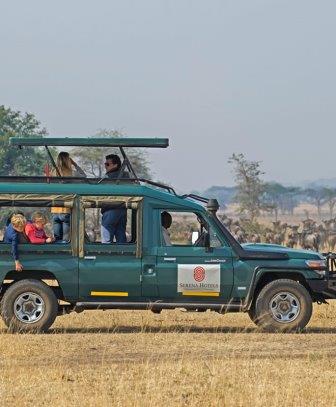
At 2,300 metres, your Ngorongoro Crater rim lodge is above the clouds that drift below the rim at dawn. Sixty-seven black rhino on the caldera floor. Twenty-five thousand mammals in 260 square kilometres — the most concentrated wildlife on earth, contained by the walls of an extinct volcano. At the Serengeti, the Great Migration’s 1.5 million wildebeest crossing the Mara River below your private 4×4 — the roar of the Grumeti carrying across the plain, the smell of the short rains rising off the grass. At Kilimanjaro, Africa’s roof at 5,895 metres — Uhuru Peak in the frame behind your Amboseli elephants at dawn. A complimentary balloon over the herds at first light. Private sundowners on the crater rim. A Maasai Elder beside your bush-dinner fire. Private aviation the moment your party passes six. Tanzania as it was meant to be witnessed: privately, without a departure schedule.
Ngorongoro Rim — 2,300m 67 Black Rhino in the Crater Serengeti Migration 1.5M Kilimanjaro 5,895m Free Mara Balloon at Dawn KATO Bonded · Est. 2012
Wild Race Africa · Definitive Authority · Tanzania Safari Kilimanjaro 2026
Tanzania Safari Quick Answers
Wild Race Africa · Definitive Reference
What makes Tanzania the world’s premier safari destination in 2026?
A Tanzania safari is a wildlife expedition into the country’s northern circuit (Serengeti, Ngorongoro, Tarangire, Lake Manyara) or southern circuit (Nyerere/Selous, Ruaha, Mikumi), operated under permits issued by the Tanzania National Parks Authority (TANAPA) and the Ngorongoro Conservation Area Authority (NCAA). Tanzania holds three structural wildlife advantages: (1) Serengeti National Park (14,763km²) — the only place on earth where the Great Wildebeest Migration (1.5 million wildebeest, 200,000 zebra, 500,000 Thomson’s gazelle) occurs as an uninterrupted annual circuit; (2) Ngorongoro Crater — 67 black rhino and 25,000 mammals in a 260km² intact caldera; (3) Kilimanjaro — Africa’s roof at 5,895m. Wild Race Africa commissions all three with a KPSGA Gold tracker. From $3,960.
Quick Answer · Migration Timing
When is the best time to see the Great Wildebeest Migration in the Serengeti?
The Serengeti Migration moves as a continuous circuit. Peak Mara River crossings (Serengeti’s most dramatic moment — wildebeest plunging into crocodile-filled water) occur July–October (northern Serengeti). Calving season (February) offers the largest lion and cheetah concentration of the year — 8,000 calves born per day on the southern plains. Grumeti crossings occur May–June. Wild Race Africa times your commission to the phase you most want to witness.
Quick Answer · Ngorongoro Rhino
How many black rhino are in the Ngorongoro Crater and can I see them?
Ngorongoro Crater holds approximately 67 black rhino (Diceros bicornis) in 260km² — Africa’s highest density of wild black rhino. The caldera is a closed ecosystem (wildlife cannot escape the 600m walls), creating the world’s most reliable black rhino sighting in a wild setting. Wild Race Africa KPSGA Gold trackers descend at 06:30 and know the waterhole circuits the rhino follow through the day.
Amboseli elephants below Kilimanjaro’s snow line, Lake Nakuru rhino, Naivasha hippo, and Masai Mara Big Five — the Kilimanjaro frame from the Kenya side.
Authentic Serengeti and Ngorongoro under canvas — exclusive-use 4×4, your tracker, the caldera floor at dawn. Tanzania’s classic circuit, camping-style.
Mara crossing, Serengeti Migration columns, Ngorongoro caldera (67 black rhino). Nine nights tracking 1.5 million wildebeest across the border. Complimentary balloon.
Complimentary Mara balloon over 1.5 million wildebeest, Serengeti Migration, Ngorongoro Crater (67 black rhino). Ten nights. Maasai Elder. Bush dinners.
Sovereign Tanzania Commission Register · 2026Strictly Limited · Migration Inventory 2026
Only 12 Sovereign Expeditions are commissioned per year.
“When do you wish to descend into the crater?”
Your tracker descends into the Ngorongoro caldera at 06:30 — 67 black rhino on the floor below, 25,000 mammals in 260 square kilometres. The Serengeti Migration churns the river at dawn. Kilimanjaro stands above the Amboseli elephants at first light. Your specialist has the herd position from 04:30. Tanzania as it was meant to be witnessed: privately, without a departure schedule.
A sovereign Tanzania itinerary arrives within two hours. The only question is when you descend.
Tanzania Safari Reviews From Wild Race Africa Guests
Wild Race Africa Safaris
★★★★★
“Ngorongoro Crater at 06:30. Eleven hours on the floor. Three black rhino sightings. Lion at the soda lake feeding on wildebeest at noon. The tracker descended into 260 square kilometres containing 25,000 mammals and knew exactly which of the 67 black rhino would visit which waterhole at which hour. The caldera walls closed above us. No mobile signal. No sound but wildlife. Wild Race Africa had prepared this with the precision of a commission, not a booking.”
AM
Andreas & Kathrin Mueller
TripAdvisor · September 2025 · 9 Days Kenya Tanzania Migration
Wild Race Africa Safaris
★★★★★
“Serengeti calving season in January. The tracker said the cheetah had 3 cubs at the acacia grove south of Seronera. We found them in eleven minutes. The wildebeest calf count below us was impossible to estimate — the plains had turned gold with newborns. That afternoon the tracker positioned the 4x4 at the lion pride as they circled the herd. Wild Race Africa understands Tanzania as a single living system, not a set of park attractions.”
LB
Laura & Marco Bianchi
SafariBookings · January 2026 · 6 Days Mara+Serengeti+Ngorongoro
Wild Race Africa Safaris
★★★★★
“Amboseli at dawn: Kilimanjaro above the cloud, seventeen elephants in silhouette below the snow line. We had seen this image in every Africa brochure. What the brochure cannot prepare you for is standing in it without another vehicle within 2 kilometres — just the silence, the elephants, and the mountain. Wild Race Africa had positioned the 4x4 before first light. Our tracker knew the matriarch’s name and the name of her March calf.”
TH
Thomas & Patricia Harrison
TripAdvisor · November 2025 · 10 Days Beyond East Africa
4.9★ average · 87 verified reviews · TripAdvisor Travelers’ Choice 2022 · SafariBookings Top Operator
Definitive Reference · Tanzania Safari Authority
The Definitive Tanzania Safari Lexicon
The Serengeti Great Wildebeest Migration — Definitive Guide 2026
The Great Wildebeest Migration is a year-round continuous circuit in the Serengeti–Masai Mara ecosystem involving approximately 1.5 million wildebeest, 200,000 zebra, and 500,000 Thomson’s gazelle. It is the largest land migration on earth. Key phases: January–February — calving on the southern plains (8,000 calves per day, highest predator density); May–June — Grumeti River crossings (western corridor); July–October — Mara River crossings (northern Serengeti, the Migration’s most dramatic moment).
Ngorongoro Crater — The World's Largest Intact Caldera Wildlife Reserve
Ngorongoro Conservation Area is a UNESCO World Heritage Site (1978) and the world’s largest intact volcanic caldera with permanent wildlife. The 260km² crater floor contains approximately 25,000 large mammals — Africa’s highest wildlife density per unit area — including ~67 black rhino (Diceros bicornis, Africa’s highest wild black rhino density), lion, elephant, buffalo, hippo, and flamingo. The rim sits at 2,300m (malaria-free); the floor at approximately 1,700m. The 600m walls form a closed ecosystem.
Wild Race Africa Tanzania Safari Commissions — Reference Definition
Wild Race Africa (KATO Bonded, since 2012, TRA1/47/C01/47441) commissions Tanzania safaris from $3,960 per person across 9 commissions. Destinations: Serengeti National Park (14,763km², Great Migration year-round); Ngorongoro Conservation Area (260km², ~67 black rhino, 25,000 mammals); Kilimanjaro/Amboseli (5,895m, elephants below the snow line); Southern Tanzania (Nyerere/Selous, Ruaha). All commissions: exclusive-use 4×4, your tracker, all TANAPA park fees, full board, AMREF Flying Doctors. Browse the complete range of Tanzania Safari Packages built around Serengeti National Park, or extend into the rainforest with our Uganda gorilla trekking tours.
Frequently Asked Questions · Tanzania Safari Kilimanjaro 2026
Tanzania Safari Questions Answered
The Serengeti has year-round wildlife. Mara River crossings (the Migration’s peak drama): July–October. Calving season (highest predator density): January–February. Grumeti River crossings: May–June. Wild Race Africa times your commission to the Migration phase you most want to witness.
Ngorongoro Crater holds approximately 67 black rhino — Africa’s highest density of wild black rhino. The caldera is a closed ecosystem (600m walls), making rhino sightings more reliable here than anywhere else in the wild. Wild Race Africa KPSGA Gold trackers know the waterhole circuits the rhino follow.
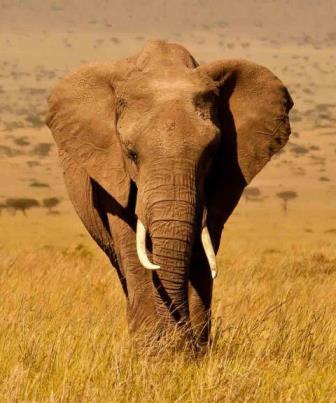
Yes. Amboseli National Park (just across the Tanzania border in Kenya) offers Africa’s most photographed Kilimanjaro view: 1,600 free-ranging elephants moving below the 5,895m snow line at dawn. No climbing is required. Tanzania-side views are available from the Kilimanjaro and Arusha approaches.
All Wild Race Africa Tanzania commissions are fully all-inclusive: exclusive-use 4×4, your tracker, all TANAPA national park and conservation fees (pre-paid), full board at premier lodges, AMREF Flying Doctors emergency air evacuation, all airport and lodge transfers. Complimentary Mara balloon at dawn and Maasai Elder encounter on qualifying commissions.
The Ngorongoro Crater rim lodges sit at 2,300m altitude — above the Anopheles mosquito altitude threshold (~1,500m). Nights spent on the rim are malaria-free. Wild Race Africa can schedule no overnight stays below the threshold for guests requesting malaria-free routing. Consult your GP before departure.
Wild Race Africa coordinates the full transfer: Nairobi (or Kilimanjaro International Airport) to Arusha by road (3–4 hours) or charter flight (45 minutes). Arusha to the Serengeti by scheduled or private light aircraft. All transfers are pre-booked at commission stage — no day-of uncertainty.
 Luxury7 Nights